
PROUDLY SERVING THE 16TH DISTRICT

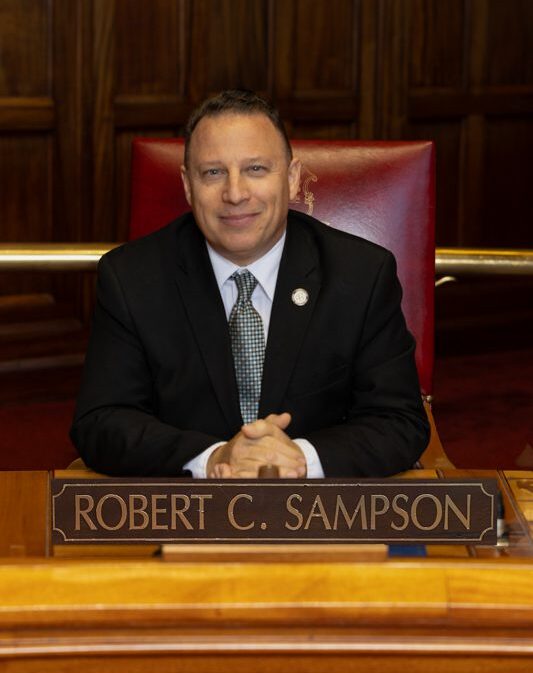
State Senator Rob Sampson

State Senator Rob Sampson

Senior Deputy Republican Leader

Rob Sampson, re-elected to a fourth term in 2024, represents Connecticut’s 16th District. He is the Ranking Member on the Government Administration & Elections Committee, the Housing Committee, and the Labor & Public Employees Committee. Rob is widely known as an advocate for America’s core principles, restoring our system of limited, representative, constitutional government, protecting private contracts and defending the natural rights of his constituents.
LEARN MORE
“I am honored to be chosen by the people of the 16th District as their voice at the State Capitol. I remain committed to defending our American principles of freedom, representation, limited constitutional self-government, and the rule of law. I believe that with hard work and our collective voices, Connecticut can become a safer and more affordable state with a bright future for all. As always, I will put in the hard work to make it happen.”
– Senator Rob Sampson

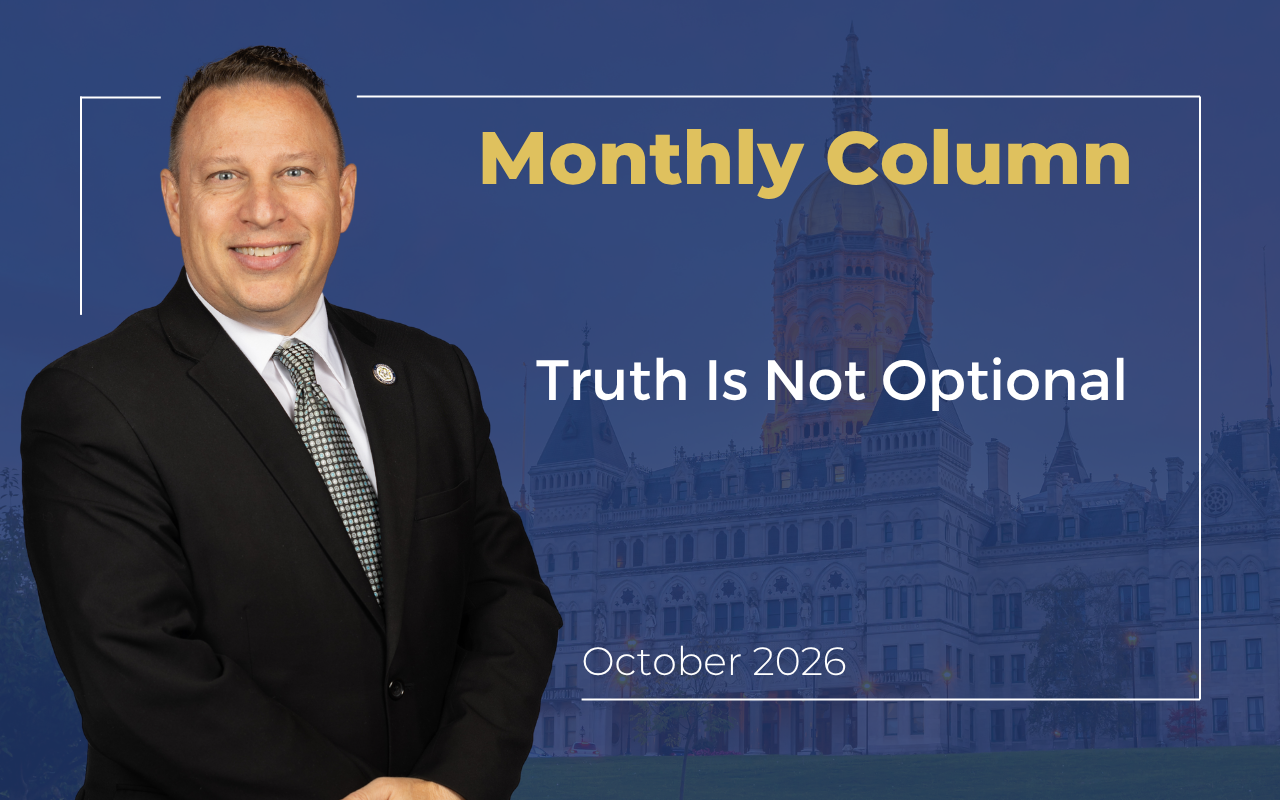
LATEST COLUMN

'America at 250: Let Us Be Exceptional Again' (July 2026)

This year, we will celebrate the United States of America’s 250th birthday. For me, it will be far more than an anniversary on a calendar, and I believe millions of Americans feel the same. It should mark a season of celebration, reflection, gratitude, and national renewal: a chance to remember what made America different, honor those who built and defended her, and recommit ourselves to keeping this extraordinary experiment in liberty alive.

Latest News

Explore the latest news and updates about Senator Rob Sampson.

Comments Box SVG iconsUsed for the like, share, comment, and reaction icons

My Answers to the UConn Faculty Union

Candidates routinely receive questionnaires from unions, political action committees, advocacy organizations, and other interest groups. The answers often influence endorsements, candidate ratings, campaign support, and what those organizations communicate to their members.

I understand how the process works, but I do not tailor my positions to win an endorsement. I will not promise special treatment to any organization at the expense of taxpayers, students, or sound public policy.

I answer honestly. I explain my reasoning. I try to act responsibly and make decisions based on what I believe will produce the best policy for Connecticut.

The UConn-AAUP Political Action Committee recently asked candidates for the General Assembly to answer questions about UConn, higher-education funding, union contracts, academic freedom, artificial intelligence, state spending, and cooperation with federal immigration authorities.

I completed and returned the questionnaire. Although the organization and I may disagree on several important issues, I respect its members’ interest in knowing where candidates stand. I also believe voters deserve to see my answers and judge them for themselves.

I support UConn’s educational mission and want it to succeed. However, supporting higher education cannot mean writing an unlimited check from Connecticut taxpayers. Students, families, employees, and taxpayers all deserve educational excellence, affordability, transparency, intellectual diversity, and responsible stewardship of public resources.

Here are my complete responses:

1. How do you understand UConn’s mission? How would you support the University of Connecticut in the long term so that it can fulfill its mission to the State of Connecticut?

UConn’s central mission should be to provide an outstanding education, conduct valuable research, prepare students for successful careers and responsible citizenship, and contribute to Connecticut’s economy and quality of life.

I support UConn’s long-term success, but success must be measured by educational excellence, affordability, transparency, and results. The university should place students, classroom instruction, and high-quality, mission-related research ahead of administrative expansion, political advocacy, and programs that are unrelated to its core educational mission.

2. Do you believe that public higher education in the state, including UConn, should receive less than, more than, or the same level of financial support from the state that it currently does for research and instruction? Why?

I do not support increasing UConn’s dependence on Connecticut taxpayers. Over time, I believe the university should operate with less state support by controlling administrative costs, prioritizing essential academic programs, using its existing resources responsibly, and limiting nonessential spending.

Connecticut families are already struggling with some of the nation’s highest taxes, energy costs, housing costs, and overall cost of living. Before asking those families for additional money, UConn should demonstrate that existing tuition and taxpayer funding are being used efficiently and primarily for instruction, student success, and high-quality, mission-related research.

3. In your view, what changes, if any, are necessary to the state’s so-called “fiscal guardrails”?

Connecticut should follow and preserve its fiscal guardrails, not weaken or circumvent them whenever politically favored constituencies request additional spending.

The guardrails have helped restrain unsustainable spending, reduce unfunded liabilities, and create greater financial stability. They should be applied consistently. Connecticut cannot become more affordable by returning to the spending and borrowing practices that created our long-term fiscal problems.

4. Do you support the recently concluded collective bargaining agreements with state employees, including UConn employees, granting salary increases of approximately 4.5% for three years? Why or why not?

No. I did not support the agreement providing salary increases averaging approximately 4.5 percent annually for three years. Compensation should recognize performance and be competitive where necessary to recruit and retain talented employees, but it must also be affordable, justified, and connected to actual workforce needs.

Every state budget reflects choices among competing priorities. Money committed to employee compensation is money that cannot also be used for student financial aid, classroom instruction, academic programs, municipal aid, transportation, health care, assistance for vulnerable residents, tax relief, or other public needs. Those tradeoffs should be acknowledged honestly rather than treating each new expenditure as though it exists in isolation.

Many Connecticut residents are not receiving comparable raises, yet they are expected to finance the cost of these agreements while also facing rising taxes, energy bills, housing costs, and other household expenses. I did not believe this package adequately accounted for taxpayers’ ability to pay or the many other demands placed on limited state resources.

5. Do you believe academic freedom, the freedom to teach, publish, and engage in public commentary without institutional punishment, is important for Connecticut colleges and universities? If so, what should the General Assembly do to strengthen and protect academic freedom?

Yes. Genuine academic freedom is essential to higher education. Faculty members and students should be able to research, discuss, question, and debate controversial ideas without retaliation.

That freedom must apply across the political and philosophical spectrum. Academic freedom should not become a justification for ideological conformity, compelled speech, partisan advocacy presented as established fact, or shielding a public institution from legitimate transparency and accountability requirements.

The General Assembly should protect freedom of inquiry, viewpoint diversity, due process, institutional transparency, and the right of students and faculty to express dissenting opinions.

6. What threats, if any, do you see that are affecting higher education in the state? What should the General Assembly do to address these threats?

The greatest threats include rising costs, administrative bloat, declining public confidence, ideological conformity, insufficient viewpoint diversity, and a growing disconnect between some academic programs and the practical needs of students and employers.

Higher education suffers when students believe they are being told what to think rather than taught how to think. It also suffers when taxpayers see rapidly increasing costs without corresponding improvements in affordability or educational outcomes.

The General Assembly should demand greater financial transparency, protect intellectual diversity, review administrative spending, measure educational outcomes, and ensure that public institutions remain focused on education rather than political activism.

7. What changes, if any, should the General Assembly make in the statutes governing state employee collective bargaining?

Connecticut should review its collective bargaining statutes to ensure that elected officials remain fully accountable for agreements that create significant and long-term obligations for taxpayers.

Collective bargaining has an appropriate role in determining wages and working conditions. However, agreements involving pensions, retiree health care, and other substantial long-term liabilities should receive meaningful public scrutiny and legislative review before the state is committed to them.

Any reforms should be prospective, fair to employees, respectful of benefits that have already been earned, and designed to produce a compensation system that is sustainable for both public employees and Connecticut taxpayers.

8. What is the role you envision for the arts, humanities, and sciences in higher education in the State of Connecticut?

The arts, humanities, and sciences all have important roles in a complete education. They develop knowledge, creativity, communication skills, scientific understanding, cultural literacy, and critical thinking.

Supporting these disciplines does not mean that every program must receive unlimited taxpayer subsidies regardless of cost, enrollment, outcomes, or public value. Universities should provide excellent educational opportunities while remaining accountable for affordability, demand, academic quality, and responsible stewardship of public funds.

9. What are your thoughts, if any, on the introduction of AI into universities? What should the General Assembly do to address education workers who are worried about the increasing use of AI for various instructional duties, for example, grading student work?

Artificial intelligence will transform education, employment, research, and nearly every other part of society. Universities should prepare students to understand and use AI responsibly rather than attempt to prevent its adoption.

Concerns from education workers should inform safeguards and implementation, particularly with respect to privacy, academic integrity, accuracy, transparency, and the continued need for human judgment. However, those concerns should not become a basis for prohibiting the responsible adoption of AI or permanently freezing existing duties and staffing models.

The purpose of a university is to educate students effectively. AI policy should therefore be judged by whether it improves educational quality, productivity, access, and affordability.

10. What do you think would be the appropriate response on the part of UConn if ICE or any other federal immigration agency were to visit the campus?

UConn should comply fully with lawful requests from ICE and other federal law-enforcement agencies. University officials should not obstruct federal officers or adopt policies designed to interfere with the enforcement of federal law.

At the same time, all individuals should be treated respectfully and afforded the protections provided by law. The proper policy is straightforward: cooperate with lawful authorities, respect due process, maintain campus safety, and do not place political ideology above the law.

I recognize that some people and organizations will disagree with these answers. That is their right.

My responsibility, however, is not to tell every interest group what it wants to hear. It is to represent the people of Connecticut honestly, protect taxpayers, uphold the law, support sound public policy, and make responsible choices among competing priorities.

That is what I have tried to do here, and it is why I am sharing my complete answers publicly.
... See MoreSee Less

I recently stopped by A La Mode Dessert & Ice Cream in Southington and had the pleasure of meeting owner Alexis. Thank you for the warm welcome and for sharing your passion for creating delicious treats everyone can enjoy, from gluten-free and nut-free desserts to dairy-free and vegan options!

Stay tuned for more local business spotlights from around the district! 🍦
... See MoreSee Less

Load more